
How Buyers Actually Evaluate Your Home Online (And Why It Matters)
Buyers don’t start by walking through your front door. They start by scrolling.
And in most cases, they decide within seconds whether your home is worth a closer look or just another listing to skip past.
That first digital impression carries more weight than most sellers realize.
The First 10 Seconds of Buyer Judgment
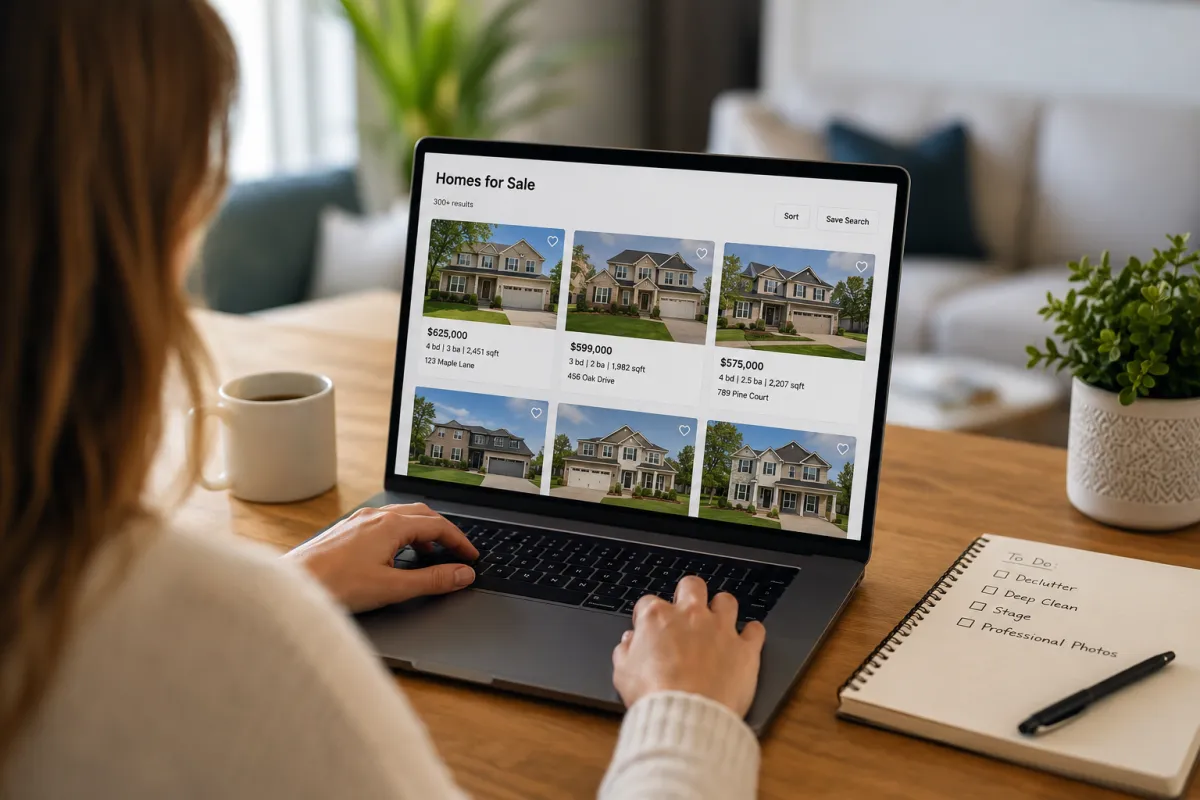
Today’s home search starts online by default. Buyers scroll through listings quickly, often comparing dozens of homes in a single session. By the time they ever schedule a showing, they’ve already formed an opinion based entirely on what they saw on a screen.
That opinion forms fast.
Within the first few seconds of opening a listing, a buyer has already decided whether your home feels worth exploring further or whether they’re moving on. They’re not studying square footage or reading the description yet. They’re reacting to what they see and how it makes them feel.
That matters because if a home doesn’t pass that initial scroll, it never gets the chance to compete on its actual strengths. The layout, upgrades, and location may be excellent, but none of it matters if the buyer never clicks.
For most buyers, the online listing is the first showing and sometimes the only one that determines whether there will ever be an in-person visit.
Photography Makes or Breaks the First Impression
The single most important factor in that first impression is photography.
Not price. Not even location.
Photos.
Good real estate photography doesn’t “overhype” a home. It accurately presents it in its best light, clean, bright, and inviting. It helps buyers understand the space and imagine themselves living there.
Poor photography does the opposite.
Dark rooms, awkward angles, cluttered spaces, or inconsistent lighting make homes feel smaller and less appealing even if the property itself is great. Buyers may not consciously analyze it, but they feel it instantly.
Even smartphone photos send a message. Whether intended or not, they can signal that the listing wasn’t prepared carefully. In a competitive market, that can be enough for buyers to keep scrolling.
The order of photos matters too.
A strong exterior shot should lead. The most appealing interior spaces should follow early in the gallery. If a listing starts with a garage, hallway, or dimly lit room, many buyers won’t stick around long enough to see the better parts.
Descriptions That Connect vs. Descriptions That Get Skipped
Most listing descriptions sound the same.
They list features. They repeat specs. They check boxes.
And while that information is necessary, it’s not what makes a buyer care.
Strong listing descriptions do something different. They help buyers picture life in the home.
There’s a difference between saying:
“Large backyard”
and saying:
“A backyard with enough space for weekend dinners outside, gardening, and room for kids or pets to play.”
Both are accurate. Only one creates a mental image.
That’s the key.
Buyers aren’t just evaluating data. They’re trying to imagine daily life in a space they’ve never been inside. The more clearly your description supports that imagination, the stronger the connection becomes.
Even small details matter, such as morning light in the kitchen, the flow between living spaces, or how a room naturally fits everyday routines. These are the details that help a home feel real, not just listed.
Generic descriptions blend in. Specific, grounded ones stand out.
Why Some Homes Get Showings and Others Don’t
When a home isn’t getting showings, price is usually the first thing people question.
But often, the issue shows up earlier than that.
Presentation.
Two homes in the same neighborhood, at the same price point, can perform very differently online. One gets clicks, saves, and showing requests. The other gets scrolled past repeatedly.
The difference usually comes down to how the listing is presented.
A strong visual and written presentation earns attention. A weak one does not, even if the home itself is just as good or better.
This becomes especially important for expired listings. When a home did not sell the first time, it’s worth asking whether enough qualified buyers ever saw it in the right light in the first place.
A great home with poor presentation can easily become invisible.
Showings don’t happen because a home is listed.
They happen because something about the listing made a buyer pause long enough to want more.
What You Can Control Before You List Again
The good news is that presentation is something you can control.
Unlike interest rates or market shifts, your listing’s first impression is fully adjustable before it goes back online.
Start with photography. If your previous listing didn’t use professional quality images, this is the single highest impact change you can make.
Then look at staging or decluttering. The goal is simple, help each room show its full potential without distractions.
Next, revisit the listing description. Make sure it’s not just accurate but intentional. It should help buyers understand not just what the home has, but what it feels like to live there.
Finally, review everything as a package. Photos, description, and image order should all work together to create a consistent, appealing story.
When everything aligns, buyers notice.
And when buyers notice, they take action.
Taking the Next Step
If your listing recently expired or you have been unsure about how to approach selling again, the way your home is presented online matters just as much as pricing strategy.
Before making any decisions, it helps to understand where you stand in today’s market.
Request a free, no obligation cash offer to see your home’s current value. It gives you a clear starting point so you can decide your next move with confidence, whether that’s relisting with a stronger presentation, exploring a direct sale, or simply understanding your options before moving forward.